
Making AI Grid
earn for Telcos.
NVIDIA’s AI Grid vision is clear: inference should run where latency, cost and data rules fit best, and telcos already own the sites and connectivity to put it there.
Just two things missing: a way to remove the GPU cap from your smaller sites, and the business layer needed to commercialize your AI Grid. With hosted·ai you get both.
- Scale
- Monetization
- Token exchange
Remove the GPU cap. Serve 2–10x more models per GPU.
hosted·ai’s GPU Hypervisor brings full GPU virtualization to your NVIDIA sites. It pools GPUs, gives every tenant secure, isolated vGPUs, and multiplies the workloads, revenue and ROI each GPU supports.
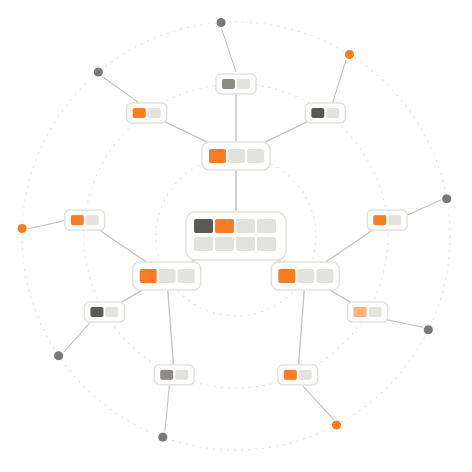
Today: one client per GPU
Illustrative four-GPU edge site
In most GPU clouds, each model is pinned to its own GPU. The number of paying tenants at a site is capped by its GPU count, which is capped by power, especially at cable hubs and RAN sites. Models that outgrow their GPU have nowhere to go, and capacity a model doesn’t use is stranded.
- 4 GPUs, 4 tenants. A fifth needs a fifth GPU.
- A spike on one model can’t use idle GPUs.
- Small models strand most of a card.
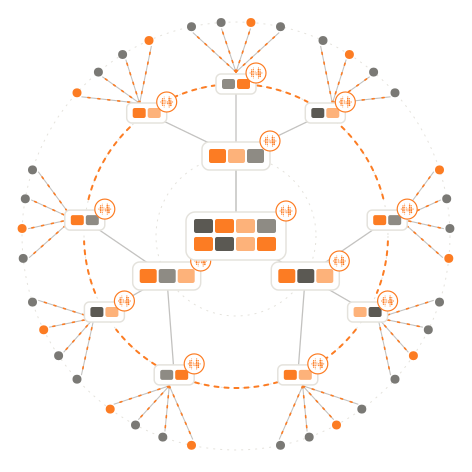
hosted·ai: many clients per GPU
Same four GPUs, pooled
With hosted·ai, every GPU joins a pool. Tenants run on vGPUs drawn from the pool, not on a particular card.
Every model has a guaranteed floor, and compute follows demand: busy models take the cycles idle models aren’t using and hand them back as traffic falls. Memory is partitioned per tenant with hard limits, so sharing stays secure.
- 4 GPUs, 12 models and more. Add a tenant, not a GPU.
- A busy model takes idle compute, then hands it back.
- Capacity left over is sold on the token exchange.
In most GPU clouds, each model is pinned to its own GPU. The number of paying tenants at a site is capped by its GPU count, which is capped by power, especially at cable hubs and RAN sites. Models that outgrow their GPU have nowhere to go, and capacity a model doesn’t use is stranded.
With hosted·ai, every GPU joins a pool. Tenants run on vGPUs drawn from the pool, not on a particular card. Every model has a guaranteed floor, and compute follows demand: busy models take the cycles idle models aren’t using and hand them back as traffic falls. Memory is partitioned per tenant with hard limits, so sharing stays secure.
Fits the reference design
hosted·ai runs on the RTX PRO 6000 and GB300 sites NVIDIA’s AI Grid specifies. No new hardware.
Works with your serving stack
Dynamo, NIM, TensorRT-LLM and partner placement engines keep their jobs. We add utilization, products, billing and demand.
No application changes
Unmodified CUDA. Tenants see a GPU or an API, never the hardware.
MIG vs time-slicing vs MPS vs the hosted·ai GPU Hypervisor
Multi-Instance GPU, time-slicing and Multi-Process Service each give up flexibility, isolation or fairness. Multi-tenant inference at the edge needs all three. hosted·ai delivers by pooling GPUs and dynamically scheduling multi-tenant workloads to maximize output per GPU.
| Approach | Models per GPU | Isolation | Changing shares | Busy model uses idle compute |
|---|---|---|---|---|
| Dedicated GPU | One | Full | Buy a GPU | No |
| MIG | Fixed slices | Hardware | Destroy and recreate | No |
| Time-slicing | Several | None for memory | Round robin | Yes, unprotected |
| MPS | Several | Address space only | First come | Yes, can starve others |
| hosted·ai GPU Hypervisor | Up to 10 vGPUs per card | Memory isolated per tenant | Continuously, by demand | Yes, with a guaranteed floor |
Add the business layer. Products, demand, getting paid.
hosted·ai turns your NVIDIA sites into GPU-as-a-Service products that sell, bill and pay out, under your brand. It also connects your AI Grid to a global demand network, bringing you buyers for tokens and rentals from day one. NVIDIA’s reference design doesn’t change.
Buyers
Products
Sell tokens, virtual GPUs, on-demand, short-term and long-term capacity from the same fleet, dedicated or shared. Change the mix as demand moves, site by site.
Demand
The token exchange and hosted·ai marketplaces bring buyers at launch, served on your capacity under your brand. Your own customers always come first.
Getting paid
Every token and GPU hour is metered per tenant, site and GPU. hosted·ai collects from exchange buyers and pays you out automatically.
The token exchange: inference throughput and scale
Enterprise demand for edge inference is the growth vector for AI Grid. Inference platforms need capacity now, at peaks and in regions where they have none. hosted·ai enables the token exchange, an inference marketplace between operators, so you serve your clients, fill idle capacity, and have access to more when your sites are full.
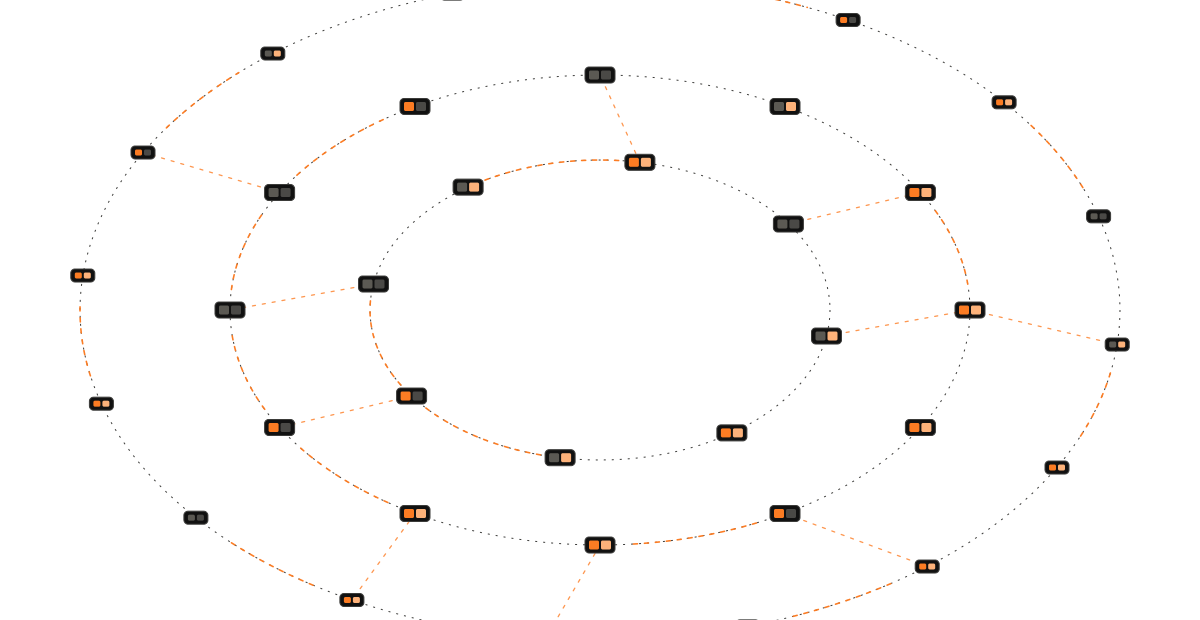
Supply
The exchange
- Apply your policy
- Place on capacity that fits
- Meter every token
- Pay out whoever served it
Demand
Operators invented roaming. The home network keeps the customer; the serving network gets paid. The token exchange does the same for inference.
Make your AI Grid earn.
Book your AI Grid review: a 30-minute call on your sites, your workloads and the products your grid could sell, covering commercials, technology or both.